Monday, April 28, 2008

Bow


I recently, and sadly, broke my violin bow. As my violin teacher once pointed out, the bow is crucial, some bows can get as expensive as millions of dollars which is more than most of the expensive violins. A bow makes the sound, and everything about the bow influences that sound. The weight, camber, balance point and materials all make a difference to the sound and my ability to play.

So when I broke my wooden bow I was worried. Thankfully my good friend loaned me his carbon fibre bow. Although the material is extremely strong and resilient (I'm not worried at all about breaking it) it is not the same as a good wooden bow (which are usually made of pernumbuco wood or brazil wood.) The different density gives the carbon fibre a different resonance. There's a saying in french, L'archet, c'est le violon. The bow is the violin. And although the new bow is quite nice it doesnt make the same sound as my old bow which relates very wholly to physics.

Have a nice rest of weekend, i.e. something like 30 minutes of it left.

Monday, April 21, 2008

Earth Day


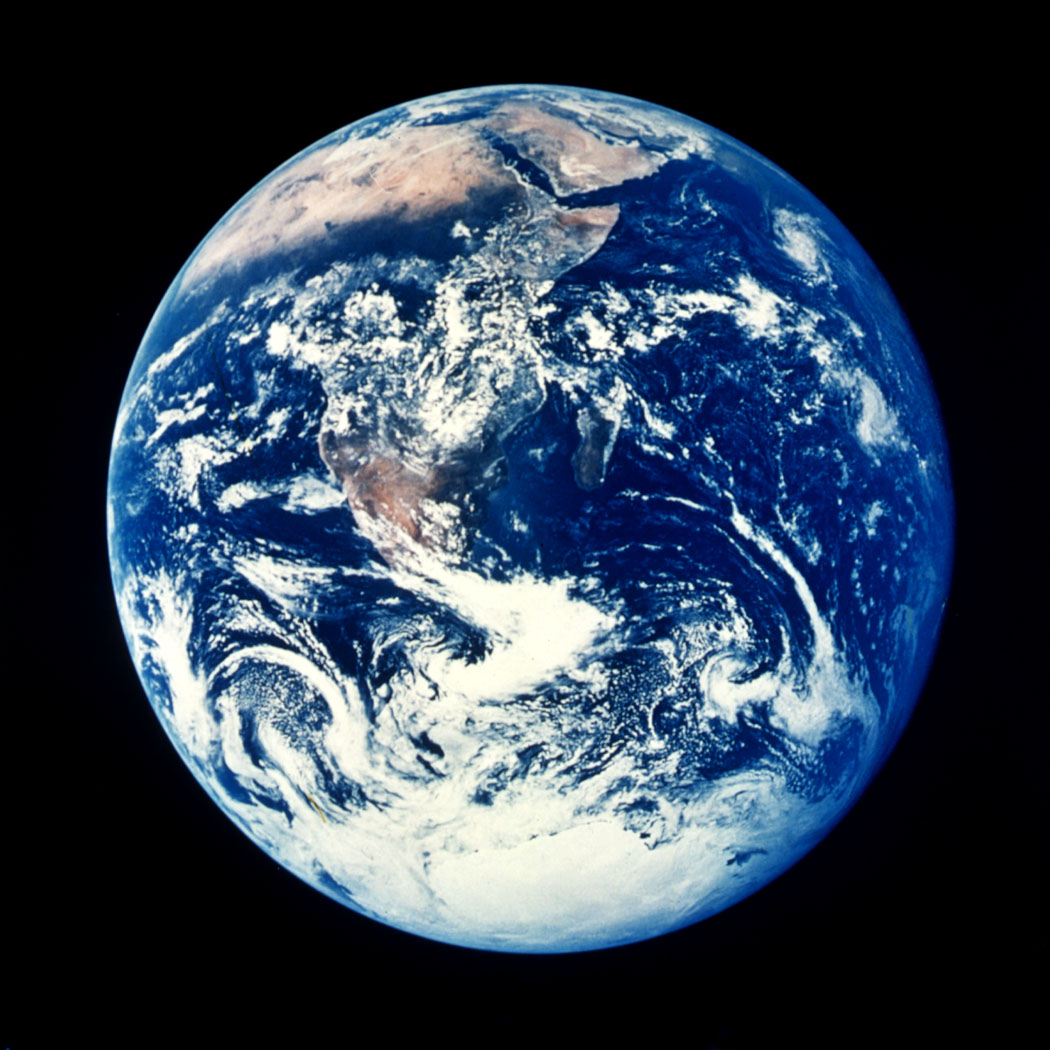
Tomorrow is Earth Day. I'll probably forget to wear green and brown, but nevertheless I'll try not to forget what earth day is all about, and that it really shouldnt be just one day when i remember the environment.

But earth is also the setting and playground for so much physics. It's where we find all those situations with friction and kinematics etc. But more relevant to saving the environment and safeguarding a pristine (ish) earth for our generations and future ones is energy. We all know that ancient fossils of all types eventually became the petroleum that gets pumped out of the ground. But it seems that some people forget that we're past the half mark of world supplies, or are just too greedy to realize that we need alternatives.

Oil is great stuff. I wouldn't be surprised if eventually this time we're living in is called the Age of Petroleum because it made our industrial modern world possible (and comfortable). However, I hope future generations don't call this the Golden Age of man because we end up going down hill from here. Oil is great, but limited and temporary.

In physics we discussed energy efficient engines and even watched a video at the beginning of the year about the electric car. I also recently read an inconvenient truth by al gore. Sadly, he recommends that we use energy efficient bulbs at the end. I don't he thinks that we can do much better or more drastic stuff. Take ethanol for instance. Not only does it has 1/3 the energy of oil but it requires a lot of farming to get to that point.

We need reform in terms of the environment. Sure businesses will complain and people can argue that people in China and India will just take our places as polluters. But a spark of true and big change is the only solution to stop destroying the earth.

Monday, April 14, 2008

The Island of Stability


Although everyone else has moved on from nuclear physics I got thinking about how an "island of stability" was mentioned in chem last year. There was a chart in the reading that showed as the masses of elements got greater and the ratio of neutrons to protons grew ever larger the stability rapidly decreased.
According to wikipedia, Glenn T. Seaborg for whom seaborgium is named after, first proposed the idea of super heavy elements that would be stable. (unlike elements like seaborgium itself which has only lasted one hour or element 118, ununoctium which only lasts 0.89 ms.)
Although the half lives of elements in the island are uncertain. Some physicists think they are basically short, only minutes and days long. However, some theoretical calculations indicate that their half lives may be long (some calculations put it on the order of 109 years). It is possible that these elements could have unusual chemical properties, and, if long lived enough, various applications (such as targets in nuclear physics and neutron sources). However, the isotopes of several of these elements still have too few neutrons to be stable.
Perhaps in our lifetimes we will see the "shores" of this island reached, with a radical application ready. Anyways, I'm tired, have a nice 30 minutes of sunday left everyone.

Sunday, April 6, 2008

Arthur C. Clarke


Sadly, the few days before we all went off to spring break, a time that seems so long ago, no one mentioned a word about Arthur C. Clarke. The visionary writer died on March 19 at the age of 90.

I'm sure that many of us saw the epic Stanley Kubrick film 2001 based on Clarke's short story the sentinel, but in addition, Clarke also drew up the first plans for artificial satellites in 1945, at a time when space and communications seemed to be wholly unrelated. I indeed watched 2001: a space odyssey and the sequel, then read the following two books, all of which I really enjoyed. I've read a bunch of his other stories including Childhood's End.

But aside from being an amazing writer, Clarke was a scientist. Through his books so many people's minds have been opened to science but better yet, they have been exposed to doing the impossible.
Here are Clarke’s Three Laws: published in his Profiles of the Future

1. “When a distinguished but elderly scientist states that something is possible, he is almost certainly right. When he states that something is impossible, he is very probably wrong.”

2. “The only way of discovering the limits of the possible is to venture a little way past them into the impossible.”

3. “Any sufficiently advanced technology is indistinguishable from magic.”

His visions and optimism certainly have inspired many including myself. These visions have in turn helped bring about his predictions into reality. From a wholly unrelated play, South Pacific, comes an entirely appropriate quote, "How you gonna have a dream come true, if you don't have a dream".

Far from being my favourite science-fiction author he still grabbed my attention with his sweeping overviews of what the future holds. He made the impossible look so feasible, and its more of this attitude that is needed to give dreamers hope of making dreams into reality.

And so ends my pitifully unworthy tribute to a great man, Arthur C. Clarke. A man who helped to inspire exploration in us all of the world around us and of the world inside ourselves. I hope his visionary optimism of the future lives on in scientists and others around the world. Have a nice weekend everyone.

Sunday, March 16, 2008

The End of Cosmology


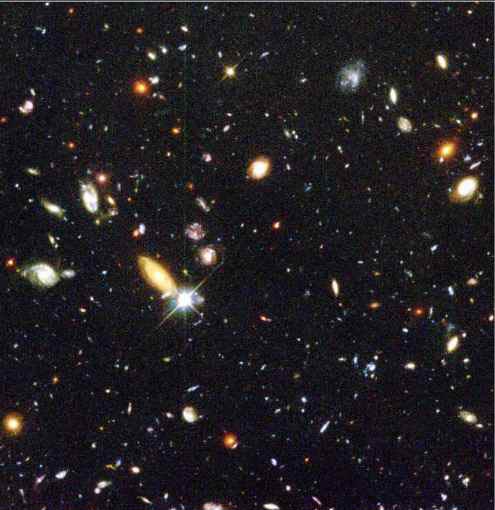
A 100 trillion years from now the last stars will fade out and the only lights will be a few dim black holes and the artificial lights of civilization, at least according to the latest issue of scientific american.

There are 400 billion galaxies in our universe. And one decade ago cosmologists made the discovery that the universe's expansion is accelerating. One day the skies will be empty (if earth gets through the next 100 trillion years..). In the future the universe will look like a puddle of stars and then drop completely out of view. The article also brings up the issue of what evidence from the past we could have already lost.

This obviously relates to physics because of things that we study like light and optics. Light is fast (ha) but the distances in the universe are unimaginably immense. In addition one must wonder how to deal with a vast universe in terms of Newton's theory of universal gravitation because theres just so much matter.

But in relevance to human society it still has implications. No human will be around 100 trillion realistically speaking. But like Copernicus 500 years ago, these discovery change our attitude towards the earth and the universe. We are incredibly small to put it bluntly. And the universe itself is neither constant nor eternal.

Grand implications indeed to think about. Have a nice weekend everyone.

Sunday, March 9, 2008

The Opti-Gone Mirage


What a fantastic trademarked name.. ha. and what an awesome photo!..

thank goodness we had a day to think about this. But i think i now have the general idea. The insides of the mirage generator is lined with a reflective surface. The top and bottom act as two concave mirrors. Thus, the object at the bottom is at the focus point of the top mirror. Light rays go through the top mirror focus from the object, and reflect parallel down to the bottom mirror. These light rays reflect towards the focus of the bottom mirror, which is opposite the one at the bottom, therefore producing the illusion that there is an object where it is not.

have a nice rest of the weekend everyone!

Monday, March 3, 2008

Galerie des Glaces


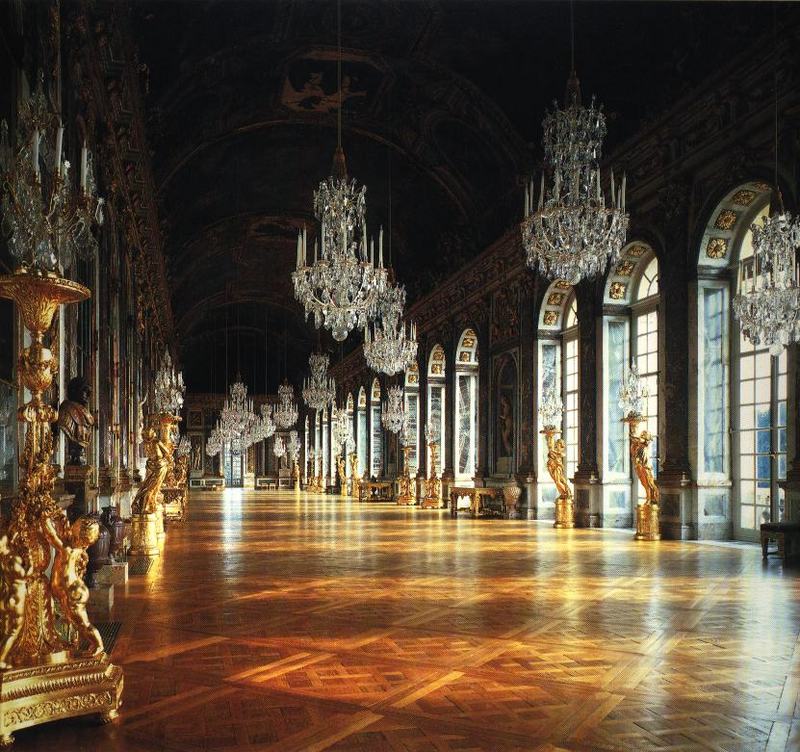
The hall of mirrors is immediately what came to mind. It is a hallway full of mirrors in the Palace of Versailles just outside of Paris. Sadly when i was there it was being partially renovated. But at least i got to see some of it!
When two mirrors are placed parallel to each other the images made by each mirrors gets seen by the parallel and so on. This means an infinite number of images in the mirrors.
One can almost imagine Wilhelm I being proclaimed Kaiser..
The hall is quite elegant and so many mirrors increases the ambient light as well.
Anyways, can't write much more, have a nice remaining weekend everyone! Something like an hour and half of it.